Regulatory Adjustments Redefine Payment Processing and Bonus Structures for Online Poker Players
Xander Braun · Aug 5, 2026

Regulatory Adjustments Redefine Payment Processing and Bonus Structures for Online Poker Players
Data from multiple jurisdictions shows regulatory updates have prompted operators to modify deposit methods and promotional incentives in online poker since early 2025, with further implementations scheduled for August 2026 in select markets across North America and Europe.
Payment processors now face stricter verification protocols under anti-money laundering frameworks, leading platforms to integrate additional identity checks that extend transaction times yet enhance security layers for participants in regulated environments.
Payment Method Adaptations Across Regions
Authorities in several Canadian provinces have introduced rules requiring operators to prioritize traditional banking channels over certain digital wallets, which has resulted in expanded partnerships with credit unions and regional banks while limiting cryptocurrency options in some cases; this shift aligns with broader efforts to track fund flows more effectively.
Meanwhile, data from the American Gaming Association indicates that US state regulators have mandated enhanced reporting on bonus-related transactions, prompting sites to adjust welcome packages and loyalty rewards to comply with new caps on promotional values tied to deposit amounts.
Bonus Dynamics Under Scrutiny
Research indicates that wagering requirements attached to poker bonuses have tightened in response to consumer protection mandates, with many platforms now displaying clearer terms that break down playthrough obligations by game type and limit the contribution rates from cash game rake versus tournament fees.
One study from an Australian research institute revealed patterns where revised bonus structures led to higher retention among mid-stakes players who benefited from tiered reload offers rather than large upfront incentives, while casual participants encountered more restrictions on free-to-play entries.
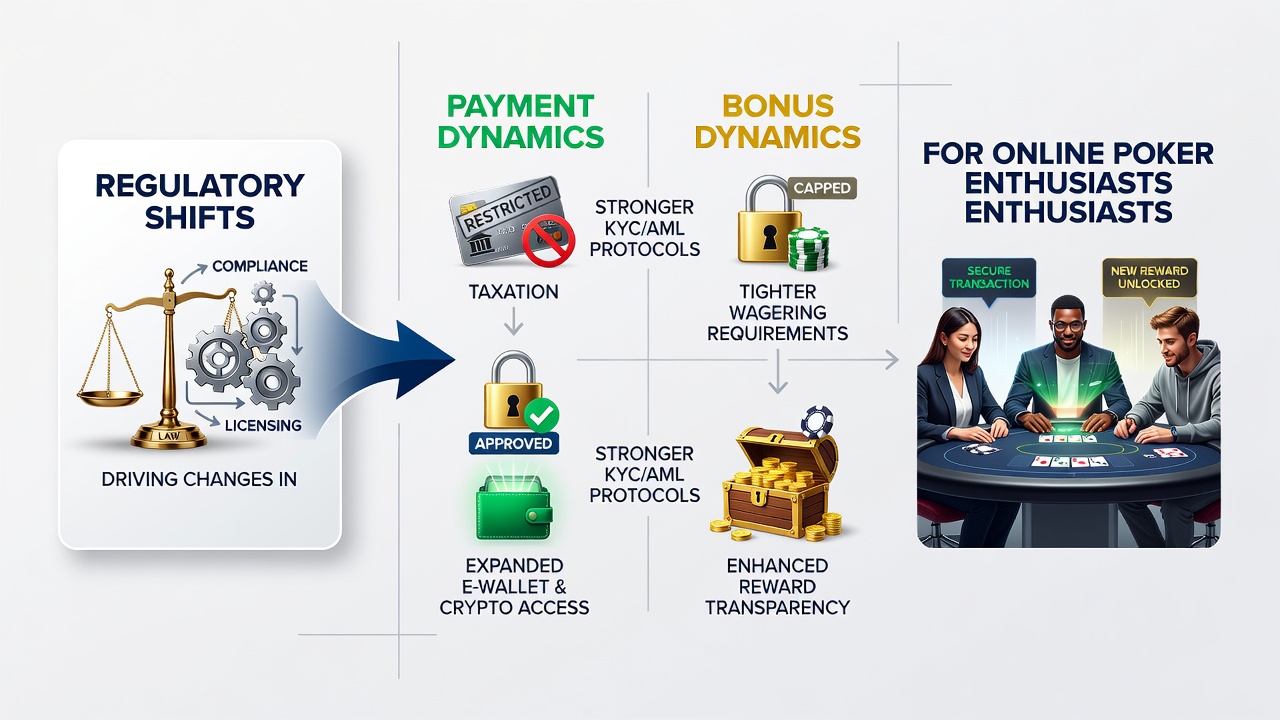
Observers note that in the lead-up to August 2026, several European Union member states plan to harmonize bonus disclosure rules, which will require operators to list maximum bonus values alongside any associated fees in a standardized format, reducing variations that previously existed between platforms.
Industry Responses and Platform Adjustments
Operators have responded by developing region-specific interfaces that automatically apply local compliance filters, ensuring that payment options and bonus eligibility update based on user location without manual intervention from players.
Figures from industry reports show increased adoption of instant bank transfer solutions in markets where regulators have approved open banking frameworks, allowing poker enthusiasts quicker access to funds for tournament entries while maintaining audit trails that satisfy oversight bodies.
Those who've monitored these changes point out that rakeback programs, once straightforward percentage returns, now incorporate activity-based multipliers that account for responsible gaming metrics such as session length limits, creating incentives aligned with new harm reduction guidelines.
Future Outlook for August 2026 and Beyond
Preparations for August 2026 include pilot programs in select US states testing unified payment ledgers that aggregate player activity across multiple sites, a development expected to influence how bonuses are calculated and redeemed in interconnected poker networks.
Evidence suggests these coordinated approaches could standardize bonus valuation methods internationally, though implementation timelines vary by jurisdiction and depend on ongoing consultations with payment service providers and player advocacy groups.
Conclusion
Regulatory shifts continue to drive measurable adjustments in how online poker platforms handle payments and structure bonuses, with data pointing to greater transparency and regional customization as key outcomes through August 2026 and subsequent periods.